Thoughts about self-acceptance

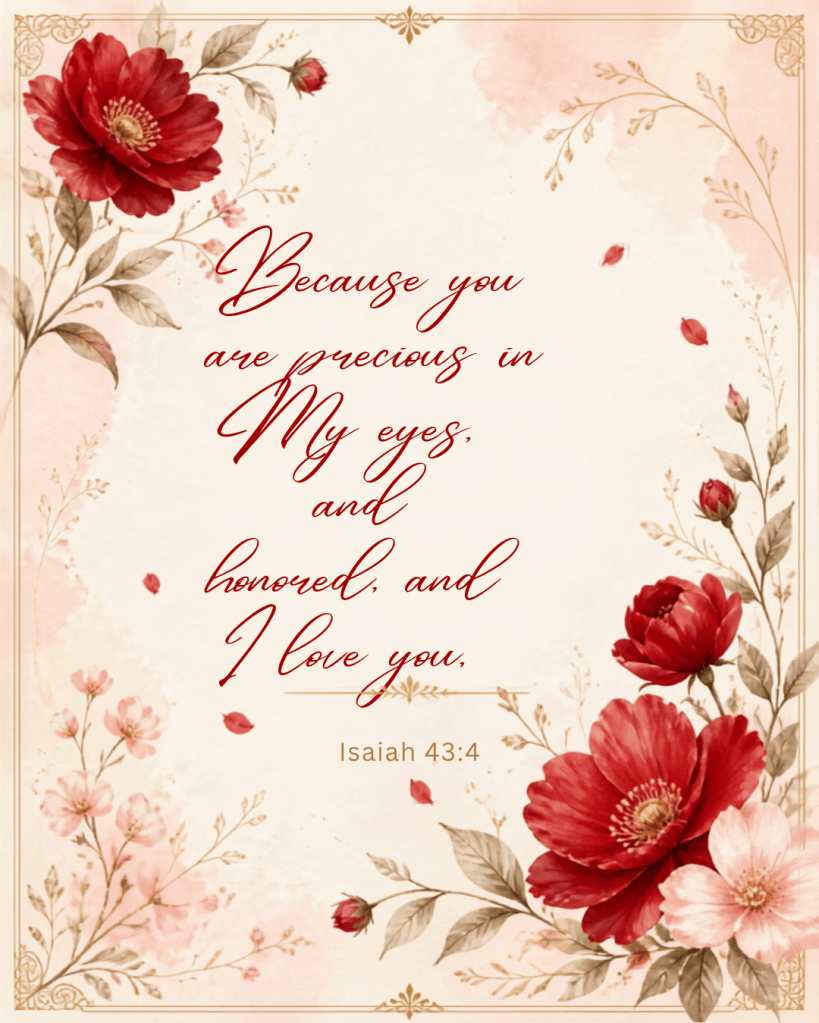
The theme of the week seems to be, for me, radical self-acceptance. The God who named Himself “I am” seems to be quite alright with us being who we are as well. This naturally comes as quite a shock to me. I grew up hearing messaging from everywhere that we should never be okay with ourselves as we are now, that we should always be striving to be better.

When I met God, I brought all the garbage I had accumulated with me. One particularly heavy bag I carried was the idea that the whole purpose of life was to be consistently “leveling up”, always “one percent better”, always seeking to improve.

Like the perfect Father He is, when He ran out to meet me He took that bag (along with the all the others) and set them aside to embrace me. I felt the weight lift immediately, and that feeling of total freedom intoxicated me. I have never forgotten that first breath of new life. But oh how quickly I picked my garbage back up and sought to follow after Him with all of it still clinging to me like the Junk Lady from The Labyrinth.

I have used Bible passages to justify this. I have run myself into the ground over and over again. I have hurt people in ways I could never have imagined over this lie, this obsession with becoming someone worthy of love. I was convinced before I met God that I would be worthy of love if I could be good enough; I was convinced after meeting Him that on my own I never would be good enough; and today I am beginning to understand that He never wanted me to be good enough, with or without Him. He just wants me — as I am.

Jesus didn’t come to begin a process of sanctification that would, in the end, make me worthy. In His leaving the Throne and taking on flesh He pronounced me worthy. The prodigal son wasn’t accepted back in to the family as a servant. There is no earning love with God. As it says in The Discipline of Grace, “God never intended that we relate to Him directly” (p 23). I read this years ago and the understanding has only deepened with time. Jesus isn’t a hall pass or permission slip; He isn’t my get out of jail free card; He isn’t waiting in the wings for me to need His forgiveness again and again. He settled it all on the cross. It is finished.

So where does that leave my obsession with “one percent better”? I still have a terrible drive; I am motivated to learn; I am restless with imperfection. My mind churns problems into solutions seemingly without any effort of will; I am most excited about life with I have a reasonably-sized problem to tackle. Finally, after many years and missteps and mistakes and failures, I am learning to accept that this love of problem-solving can be a gift . . . as long as I remember that people are not problems.

I am not a problem to be solved. I am a person that God (God! Holy, Perfect, Lovely God!!) loved enough to sacrifice His Son and His life for, who loves me enough to abide with me and lead me through life like a good shepherd.

And this isn’t only true when I am behaving well or navel-gazing, writing these heady thoughts down. No; it was true when I was barking orders last night; it was true when I responded with impatience; it was true when I judged someone much more harshly than I would like to be judged; it was true when I was selfish. And it will be true again when I inevitably mess up. I can only repent because I do not have to fear what will happen to me when I own up.

I am learning to trust the grace that I love. Maybe this isn’t so much about self-acceptance as it is trusting God . . . but it is He who made me. I cannot reasonably trust Him while holding myself in contempt. He doesn’t hold Himself back from me. And he doesn’t hold Himself back from you.

I don’t know who these are for. Hopefully someone other than me. Thank you for reading. God loves you.

A Call to Read the Psalms

This week I am not brimming with something to talk about. I could delve into my perennial frustration with being a human. I could talk about the subjugation of friendship to media platforms. I have much to say about homeschooling influencers and the unbelievable amount of people who are preying on parents who just want to do what is best for their kids.

My husband said I could write about what I thought about the sermon this morning. I don’t feel like I have much to say, but here goes . . .

The sermon was about Psalm 34. The church with which we’re currently worshipping is doing a summer series on Psalms with various preachers. Psalms can be overlooked or seen as supplemental to understanding YHWH. When I was younger, I spent the majority of my time in the New Testament and was always making note of the commands so I could follow them. (I was terrified of being “no better than the demons”, and I didn’t truly grasp that I was literally incapable of obeying on my own. That is a whole different post.) Psalms felt like something older people who already were good at obeying might read. It is a pattern I observed, that older people quoted more from Psalms than the younger people. And older people seemed to cling to the Psalms in a way I couldn’t quite understand. I assumed that it was because of their maturity.

Well, I know I am not mature, but in the last few years I have discovered that nothing compares with the Psalms if you want to know who God is and who you are as a believer, and how He works in the world. Are you wondering if you’re worth anything? Psalm 139. Are you frustrated that people who want nothing to do with God or His ways seem to prosper? Psalm 73. Are you wondering if He could possibly still love you after all you have done? Psalm 51. Feel forgotten? Psalm 86. Those are just off the top of my head. I am sure someone more diligent than I has already compiled an index of Psalms. But really, nothing beats just reading them regularly and finding their words rising to your mind in those moments of uncertainty or joy.

Psalm 34 is in essence of psalm of triumph; David had escaped from the Philistine king and was extolling God for this. Like most psalms, it masterfully weaves human emotion with God’s unshakable glory.

Taste and see that the Lord is good.
    Oh, the joys of those who take refuge in him!
Fear the Lord, you his godly people,
    for those who fear him will have all they need.

While we love to quote “taste and see”, David didn’t forget that the fear of the Lord, taking refuge in Him, is a requirement for tasting that goodness. I know the analytic among us will likely see this as condition for God’s love. All I can say to that is this: if you read the Psalms, you will find a better argument for trusting God than all the explanations I can give. His steadfast love endures forever. He is worthy of praise. His mercy is unfathomable and He desires His people in a way that would make most sensible people blush.

I love to make much of God’s mercy, but I can’t do that without also making much of His worthiness . . . and I fear in making much of His holiness, majesty, glory I lose the people He wants to save and further entrench those of whom He said, “I never knew you.” This is my failure, but the Psalms show the way:

Unfailing love and truth have met together.
    Righteousness and peace have kissed! – Psalm 85:10

Read the Psalms.

Gospel

I go on detours. Sometimes it seems like the detours take more time than the actual race. I have spent years in ditches, weeks on mountain ranges (just look at those clouds!), days meandering in meadows or swamps. If life were a finish-first type race, this would be devastating.

Life is not a finish-first type race; it is a finish-strong type race. Thank God.

Detours may be off the path, but I cannot deny how those detours inform how I walk the path when I return. Falling from heights has made me grateful, truly humble. Being chased from swampland by an alligator has made me think of it as the safest foundation. God pulling me up from the ditch has me dancing, not walking, on the rock beneath my feet. Every detour has only made the path more beautiful, more certain, more alluring. And while my desire to remain on this path grows with each detour, I find my tendency to stray no less.

What does this mean?

Only that after such a long detour this past several months of swimming in perspectives that glorify human experience, grasping at understanding like one who does not know he is in the dark, accepting reasoning that falls short of gospel-reasoning, I come up for air and find that the path is still here; the Ancient of Days is, in fact, still unchanged.

And my greatest problem is still — not the society I live in, the pain I feel, my coping mechanisms, DNA or even the sin of others — my greatest problem is my own sin. My own rebellion, my own hard-heartedness, my own selfishness, greed, and pride. And while all those other problems exist, if I attempt to understand them outside of the deep knowledge that my greatest problem has been gloriously solved for all eternity, I will despair.

Lately I have felt like I need to untangle all that I have gone through as a child and young adult, and spending so much time reading about the life experiences of others. I have been reading some (really good) parenting advice and I dipped my toes into the waters of psychology again as a means of trying to understand myself and how on earth I might heal a soul and body that has been through more than some people experience in twice as many years. YouTube recommended a channel about healing from cPTSD. The word “safety” keeps coming up in terms that my ancestors would have had a good laugh over. A dirty house makes you feel “unsafe”? Lipschein, I think the word you are looking for is “uncomfortable”.

One step into the waters of psychology quickly pulls me under, as these are the waters of my youth. I go from just wanting a little more context than I can find in scripture for my particular areas of struggle to breathing the water of God-outside-the-world, not relevant to the everyday, insufficient or indifferent to my emotional distress. God wasn’t enough to explain, so He lets me see how far I get without Him. Turns out, not far. I go from feeling like I am walking a narrow road with a small lamp at my feet to plunged in total darkness, no path at all, only a relentless tidal wave that batters me and threatens to pull me under.

The most upside-down thing is what brings me topside: a reminder that “we do not wrestle against flesh and blood”; a reminder that the gospel tells me my biggest struggle isn’t a body that “keeps score”, a brain full of faulty wiring, or even my own understanding of how to deal with those things. My biggest problem is that I am prone to take detours.

The detours are not the problem; I am not the problem; I am simply a human being who wanders like we all do. My choosing to take the detours — that choosing is the problem. But thanks be to God, I know the path. So many do not. So I am confronted today with a blessing that does not look like one until you see the other side of it: I have sinned and I can repent.

God uses all these things for good. Some of this I see; some of this I must trust. But this I know after so much wandering, so much meandering — He even uses my sin.

So I am going to publish this and it will probably serve more to confuse than edify, so if you have read this far let me leave you with something unequivocal:

The good news of the gospel is that Jesus Christ came to save sinners. He didn’t come primarily to bring rest to the weary (though He does), to bring justice to earth (though He will), or to make us “better people” (though we find in the course of following Him we have no choice but to look more like Him who is infinitely better than all we can ask or imagine). Jesus, on the cross, solved our biggest problem. When things get heavy or confusing, start there. You might just find yourself asking Him to keep you near.